ANCIENT WISDOM
7 Chinese Astrology Insights for 2026: A Complete Guide
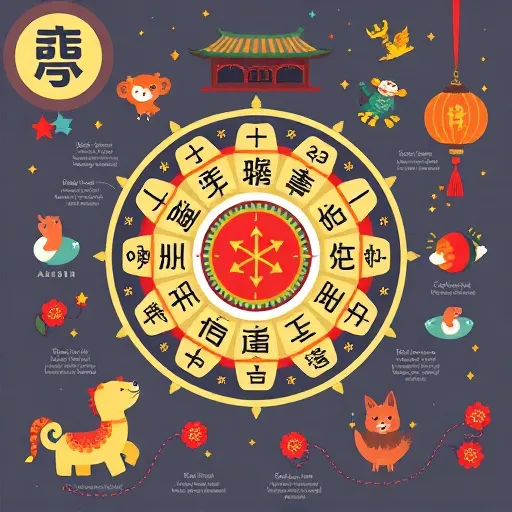
Chinese astrology cy
What Is Chinese Astrology, Really?
Let's start with the basics, because chinese astrology is one of those topics people think they know — until they actually dig in. At its core, chinese astrology is an ancient system built on a simple but powerful idea: time isn't a straight line, it's a loop. Every cycle carries its own energy, its own personality, and its own flavor. Instead of the twelve monthly star signs most Westerners grew up with, this tradition runs on a sixty-year zodiac cycle that combines twelve animal signs with five elements: Wood, Fire, Earth, Metal, and Water. Multiply twelve animals by five elements and you land on sixty possible combinations. That's why you don't just have one zodiac animal — you also carry an associated element that colors how that animal expresses itself. Two people born in the same animal year can behave completely differently, and chinese astrology explains why through this elemental layering.
According to practitioners, this system was never meant to be fortune-telling for entertainment. It's a personality lens — a way of reading tendencies, relationship compatibility, and the broader mood of any given year. As one industry professional put it, chinese astrology isn't a crystal ball — it's more like a seasonal weather report for your life. You still get to decide whether to bring an umbrella. That framing matters, because chinese astrology works best as a reflection tool rather than a rigid set of rules.
The Twelve Animal Signs, the Heavenly Stems, and the Hidden Yin-Yang Layers
The twelve animals — Rat, Ox, Tiger, Rabbit, Dragon, Snake, Horse, Goat, Monkey, Rooster, Dog, and Pig — rotate on a twelve-year loop. Layered on top are the ten Heavenly Stems, which is the fancy way of saying the five elements appear twice — once in a yang expression and once in a yin expression. When people talk about "the year of the Wood Dragon" or "the year of the Fire Horse," they're referencing this combined system. It sounds complicated, but the payoff is a much richer picture of a personality or a year than you'd get from a single animal sign alone. This is why serious chinese astrology readings never stop at the animal — they keep going into the element, the yin-yang polarity, and the full birth chart.
2026: The Year of the Fire Horse and Its Rare Astrological Energy
Here's where it gets exciting. 2026 marks the arrival of the Fire Horse, and it's the first Fire Horse year since 1966 — which means most people alive today have never consciously experienced one. In the chinese zodiac, the Horse is tied to movement, freedom, passion, and independence. Add Fire to the mix and you get something close to a double espresso shot of energy. Fire amplifies the Horse's natural restlessness, turning 2026 into a year defined by bold action, rapid change, and a widespread urge to break out of routines. In chinese astrology, a Fire Horse year is considered one of the most dynamic combinations in the entire zodiac cycle.
Astrologers often describe Horse years as "fast" years — periods when momentum builds quickly and sitting still feels almost uncomfortable. A senior practitioner once compared a Horse year to a wild stallion: exhilarating if you know how to ride it, chaotic if you don't. With the Fire element in play, that metaphor gets even more intense. Expect a year of visible shifts in culture, technology, and personal priorities. People may feel restless in their jobs, eager to travel, or ready to finally launch that side project they've been sitting on. This is the kind of chinese astrology forecast that actually nudges people into action.
The Personality of the Fire Horse and Its Bold, Independent Spirit
If you were born in a Fire Horse year (previously 1966, and now 2026), tradition holds that you're a natural trailblazer. Fire Horses are often described as charismatic, energetic, and fiercely independent — the kind of people who'd rather chart their own path than follow a map someone else drew. They tend to be magnetic in social settings, impatient with bureaucracy, and deeply driven by passion rather than obligation. The flip side? A tendency toward impulsiveness and a low tolerance for boredom. If you're a Fire Horse, the advice from experienced practitioners is simple: harness that energy with clear goals, or it'll scatter in a dozen directions at once. That's classic chinese astrology wisdom — the same trait that makes you shine is the one you have to manage.
For everyone else, 2026 carries Fire Horse energy that can rub off on your own decision-making. You might find yourself feeling bolder, more impatient with the status quo, and more willing to take risks. That's not necessarily a bad thing — as long as you build in a pause before hitting "send" on that dramatic email. Chinese astrology tends to frame these yearly forecasts as weather, not fate, and that's exactly the right mindset heading into a Fire Horse cycle.
Your Chinese Zodiac Sign: 2026 Horoscopes and Yearly Forecasts at a Glance
Curious how the Fire Horse year plays out for your animal sign? Here's a quick snapshot of the general forecast for the twelve animals, the kind of at-a-glance chinese astrology breakdown people bookmark every spring:
- Rat: A year of strategic repositioning. Move quickly but stay observant — opportunities appear suddenly, and those who act decisively are rewarded.
- Ox: Patience gets tested as the fast-paced energy of 2026 clashes with your steady rhythm. Stay grounded and avoid rushing major decisions.
- Tiger: A naturally bold sign meets a bold year — expect exciting breakthroughs, but watch for burnout. Pace yourself.
- Rabbit: Focus on relationships and personal growth. The Horse year's speed may feel overwhelming, so protect your quiet time.
- Dragon: Creative momentum builds. Travel, new ventures, and collaborations all favor you this year.
- Snake: A year for careful self-reinvention. Avoid impulsive financial moves, and trust your intuition over hype.
- Horse: Your year, and a double dose of Fire energy. Great for career leaps, but rest is non-negotiable.
- Goat: Stability becomes your superpower. Lean on your network and avoid chasing every shiny new opportunity.
- Monkey: Quick thinking pays off. Expect lively debates, travel, and some unexpected romantic developments.
- Rooster: Precision and discipline serve you well. Avoid getting swept up in other people's impulsive plans.
- Dog: A grounded year with meaningful progress in work and relationships. Prioritize loyalty and long-term investments.
- Pig: Domestic matters take center stage. Enjoy the momentum, but keep a healthy savings cushion.
Chinese Zodiac Compatibility in 2026: Animal Pairings, Elemental Matches, and Relationship Dynamics
Compatibility is one of the most-searched aspects of chinese astrology, and for good reason. The tradition holds that certain animal pairings flow naturally while others require more effort. Generally, the Horse pairs well with the Tiger, Goat, and Dog — signs that share its love of freedom and forward motion. Pairings with the Rat and Ox are traditionally considered more challenging, since those signs tend to value caution and routine. In a Fire Horse year specifically, these dynamics get amplified. Relationships of all kinds — romantic, professional, even family — will feel the push toward either rapid growth or necessary change.
Here's the practical takeaway: don't panic if your partner's sign isn't on the "easy" list. Plenty of seasoned practitioners emphasize that compatibility is a starting point, not a verdict. Communication and mutual respect matter far more than any chart. That said, if you're curious whether your specific pairing is traditionally harmonious, a chinese zodiac compatibility chart is a fun and surprisingly insightful tool. Many people find the chart describes their relationship quirks with eerie accuracy — which is exactly why chinese astrology trends so high in search interest every spring.
Elemental Compatibility: The Layer Most People Miss in Chinese Astrology
Here's something a lot of casual fans overlook. It's not just about which animal you are — the element attached to your birth year matters too. A Metal Horse and a Wood Horse share the same animal sign but can behave very differently. In 2026, since the year itself is Fire, signs that balance well with Fire — like Earth and Wood — often find the year's energy easier to channel productively. This is why serious chinese astrology readings go beyond the animal and look at the full birth chart. If you want a deeper read on your own year, look up not just your animal sign but your element sign as well.
The Five Elements and Why They Matter in 2026's Fire-Dominated Year
The five-element framework is the engine room of chinese astrology. Wood represents growth and creativity; Fire represents passion and visibility; Earth represents stability and nurturing; Metal represents structure and clarity; Water represents wisdom and adaptability. In 2026, the dominant Fire energy encourages expansion, expression, and bold moves. The balancing act is making sure you don't let all that Fire burn out your Earth-stability too quickly. A useful rule of thumb for the year: pursue your ambitions aggressively, but build in routines that keep you grounded — regular sleep, scheduled breaks, and financial buffers. That's chinese astrology at its most practical.
Chinese Astrology and the Lunar Calendar: Lunar New Year Dates and Your True Birth Sign
One thing that trips up newcomers: the chinese zodiac year doesn't start on January 1st. It kicks off with Lunar New Year, which typically falls between late January and mid-February. In 2026, Lunar New Year begins on February 17th, marking the official start of the Fire Horse year. This means if you were born in January or early February, there's a decent chance your true zodiac sign belongs to the previous animal year. Before you go around telling people your sign, double-check the exact transition dates — a surprising number of people discover they've been celebrating the "wrong" sign their whole lives. Books and reputable online lookup tools make this easy to confirm. Getting this right is step one in any serious chinese astrology exploration.
Lunar New Year itself is also a huge driver of search interest in chinese astrology worldwide. Expect the weeks before and after February 17th to bring a surge of questions about yearly fortunes, lucky colors, and the best dates for starting new ventures. It's a great time to learn, because the lunar calendar is the foundation every prediction rests on.
Practical Ways to Use Chinese Astrology This Year: Goals, Energy, and Compatibility Tips
So how do you actually put all this to use without turning your life upside down? Here are a few grounded approaches that experienced practitioners often recommend:
- Set bold goals early. The Fire Horse year rewards momentum, so map out your big moves before the energy peaks. Then chip away at them steadily.
- Protect your energy. Fast-paced years tempt you to say yes to everything. Scheduling downtime is less glamorous than chasing opportunities, but it's the difference between a productive year and a burnout year.
- Use zodiac insights as reflection tools, not fortune-telling. A predicted challenge is really an invitation to prepare. A predicted opportunity is a prompt to stay alert.
- Look at compatibility with curiosity, not fear. Use it to understand friction points in relationships, not to cut people out.
- Check your actual lunar birth year. As mentioned, it's a small step that makes every chinese astrology reading far more accurate.
The Bottom Line on Chinese Astrology in 2026: Fire Horse Energy, Timing, and Taking Action
Chinese astrology is one of those traditions that rewards you the more you explore it. It's not a rigid set of rules — it's a poetic framework for thinking about timing, personality, and the seasons of life. In 2026, the Fire Horse brings rare energy: the first of its kind in six decades. If you lean into it thoughtfully, it can be a year of genuine breakthroughs. If you run at it blindly, it can leave you exhausted. The smartest approach, according to the professionals, is to treat the year's Fire Horse energy like a powerful tool — exhilarating, but best handled with intention. That's the real promise of chinese astrology: not certainty, but clarity.
Whether you're here to find your zodiac sign, check your compatibility, or simply understand why the chinese zodiac has such a hold on people's imagination, you're now working with a solid foundation. Check your birth details, explore your element, and use the insights as a mirror rather than a mandate. The stars may set the weather, but you're still the one steering the ship in 2026 — and chinese astrology is just the forecast on your dashboard.
BaZi Analysis
Decode your Four Pillars birth chart to understand the flow of your elemental energies and life path.
Feng Shui Guidance
Align your environment with cosmic principles to cultivate prosperity and balance in your space.
Zodiac Wisdom
Explore the twelve animal signs and their influence on personality, relationships, and annual cycles.
Frequently Asked Questions
What is Chinese astrology, and how does it differ from Western astrology?
Chinese astrology is a traditional system based on lunar cycles, the sexagenary cycle, and the balance of Five Elements (Wood, Fire, Earth, Metal, Water), unlike Western astrology which relies on solar zodiac signs and planetary positions. It emphasizes yearly, monthly, and daily influences on personality and destiny rather than just birth-month traits. Key differences include: 1) Use of a 60-year cycle with heavenly stems and earthly branches; 2) Integration of Yin-Yang and Five Elements theory; 3) Focus on annual fortune trends and compatibility analysis.
How accurate is Chinese astrology in 2026, and what factors affect its reliability?
Accuracy in Chinese astrology depends heavily on the practitioner's expertise, the precision of birth data (including exact time and location), and the interpretative framework used. In 2026, many professionals combine traditional methods with modern data validation to improve consistency. Factors affecting reliability include: 1) Quality and completeness of birth information; 2) The astrologer's training and experience level; 3) Whether the reading uses a recognized system (e.g., BaZi or Zi Wei Dou Shu) consistently.
What are the main components of a Chinese astrology birth chart (BaZi), and how are they calculated?
A BaZi chart consists of four pillars—year, month, day, and hour—each represented by a heavenly stem and an earthly branch, totaling eight characters. Calculation involves converting the Gregorian birth date and time into the lunar calendar and then mapping to the sexagenary cycle, while also factoring in the Five Elements and Yin-Yang attributes. The main components are: 1) Four pillars with stems and branches; 2) Five Elements distribution and strength; 3) Ten Gods (relative relationships) for life analysis.
Is Chinese astrology safe to use for major life decisions, such as marriage or career changes?
Chinese astrology is traditionally used as a reflective and advisory tool, not a deterministic guide, so it is generally safe when treated as one perspective among many. In 2026, most professionals recommend using it to identify tendencies and timing rather than making absolute decisions. Safety considerations include: 1) Avoid relying solely on astrology for critical choices; 2) Seek qualified practitioners who disclose limitations; 3) Combine insights with practical research and professional advice.
How much does a professional Chinese astrology reading typically cost in 2026?
Costs for Chinese astrology readings in 2026 vary widely based on practitioner reputation, session length, and report depth, ranging from affordable basic charts to premium comprehensive analyses. Many services now offer tiered pricing and digital delivery options. Typical cost factors include: 1) Basic chart calculation vs. full life analysis; 2) Session format (online, in-person, or written report); 3) Practitioner experience and certification level.
What should I look for when choosing a Chinese astrology practitioner or service?
When selecting a practitioner, prioritize transparent methodology, verifiable training, and clear communication about what the reading can and cannot do. In 2026, many reputable services provide sample reports and client feedback to help you evaluate quality. Key selection criteria include: 1) Recognized lineage or certification in a specific system (e.g., BaZi, Zi Wei Dou Shu); 2) Clear explanation of calculation methods and data requirements; 3) Ethical guidelines and privacy protection policies.
Can Chinese astrology predict specific events, such as job promotions or relationship outcomes?
Chinese astrology is better suited to identifying trends, timing windows, and compatibility patterns than predicting exact events, as it describes probabilities rather than fixed outcomes. In 2026, most professionals frame readings around favorable periods and potential challenges rather than guaranteed results. Important points include: 1) It highlights favorable or challenging time windows; 2) Outcomes depend on personal actions and external factors; 3) Use predictions as planning aids, not certainties.
How often should I get a Chinese astrology reading, and when is it most useful?
Frequency depends on your goals: annual readings are common for yearly planning, while additional readings may be useful around major transitions such as career changes or relationships. In 2026, many practitioners recommend no more than one to two comprehensive readings per year to avoid confusion. Optimal timing includes: 1) Before the Lunar New Year for annual forecasts; 2) During major life transitions; 3) When seeking clarity on specific timing questions.
What are the most common misconceptions about Chinese astrology that people should avoid?
Common misconceptions include treating Chinese astrology as fatalistic, confusing it with Western sun-sign astrology, and assuming one sign defines a person entirely. In 2026, professionals emphasize that Chinese astrology is a complex system requiring full birth data and context. Misconceptions to avoid: 1) Believing a single animal sign determines personality; 2) Assuming readings are fixed and unchangeable; 3) Ignoring the need for accurate birth time and location.
Can Chinese astrology be used alongside other personal development or planning methods?
Yes, Chinese astrology can complement other methods such as goal-setting, career coaching, and financial planning by offering a timing and compatibility perspective. In 2026, many users integrate it with practical decision-making frameworks rather than using it in isolation. Effective integration involves: 1) Using astrology for timing and reflection, not replacement of practical advice; 2) Cross-checking insights with other assessments; 3) Maintaining a balanced, non-deterministic mindset.