ANCIENT WISDOM
5 Proven Steps: How to Balance Five Elements in Bazi Chart
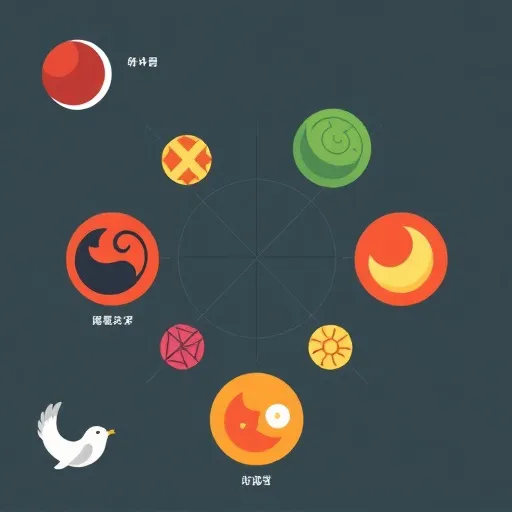
Bazi chart basics ex
What the Five Elements Actually Represent
Before you can figure out how to balance five elements in bazi chart, you've gotta know what you're actually looking at. In a bazi chart—also called the four pillars of destiny—your birth date and time get converted into a structure of heavenly stems and earthly branches. Every single one of those components maps to one of the five elements, and honestly, that's where the magic starts. Understanding how to balance five elements in bazi chart begins right here with the basics.
- Wood — growth, creativity, expansion, and forward momentum
- Fire — passion, visibility, expression, and social energy
- Earth — stability, patience, resource management, and grounding
- Metal — structure, discipline, refinement, and decision-making
- Water — wisdom, adaptability, intuition, and flow
Each element runs on two key cycles. The productive cycle goes like this: wood feeds fire, fire creates earth, earth bears metal, metal carries water, and water nourishes wood. Then there's the controlling cycle: wood breaks earth, earth blocks water, water extinguishes fire, fire melts metal, and metal cuts wood. If you want to master how to balance five elements in bazi chart, these cycles are your foundation—no shortcuts around them.
Why "Balance" Doesn't Mean Equal Amounts in Your Bazi Chart
Let's clear up a big misconception right now: balancing your elements does not mean getting exactly 20% of each. That's not how how to balance five elements in bazi chart works. A balanced bazi chart is one where the elements support your day master—the element representing you—so energy flows without getting stuck or running dry. Some charts thrive with strong fire; others need heavy water. The goal is harmony relative to your specific structure, not a mathematically even split. This is exactly where a proper day master strength assessment comes in handy, and it's a core piece of how to balance five elements in bazi chart.
Step One: Identify Your Day Master and Its Strength Through Seasonal Qi Analysis
Your day master is the heavenly stem sitting directly above your day pillar. It's the anchor of your entire chart. Once you know it, the next question is whether it's strong or weak—meaning whether the surrounding elements reinforce it or drain it. This step is non-negotiable when learning how to balance five elements in bazi chart.
A quick way to think about it: if your day master is wood and your chart is packed with water and more wood, you're likely a strong day master who benefits from fire, earth, and metal to channel that surplus energy. If your day master is wood but your chart is dominated by metal and earth, you're probably weak and would benefit from water and wood support. Getting this right is the single most important step in the whole balancing process, and it's why so many people consult a destiny analysis professional rather than guessing. Honestly, how to balance five elements in bazi chart without nailing this step first is like building a house on sand.
One thing beginners often overlook: the season of birth heavily influences element strength. A fire day master born in summer is naturally more robust than one born in deep winter. This seasonal weighting—sometimes called seasonal qi—can flip your entire assessment. Skilled practitioners always check the month branch first before counting anything else. That's a pro move for anyone serious about how to balance five elements in bazi chart.
Step Two: Map Out Missing Elements, Excessive Elements, and Clashing Forces
Once you've nailed down your day master strength, tally up the five elements across all four pillars. You're hunting for two things: missing elements (completely absent from the chart) and excessive elements (appearing three or more times). Both create imbalance, but they call for totally different remedies. This mapping stage is essential for how to balance five elements in bazi chart.
- Missing element: Often points to a life area that feels underdeveloped—for example, missing metal might show up as difficulty with boundaries or follow-through.
- Excessive element: Can create overcorrection—too much water might mean overthinking; too much fire might mean burnout from overcommitting.
- Clashing elements: When two controlling elements sit directly opposite each other, friction shows up in specific life themes.
This mapping stage is basically a strength and weakness evaluation of your chart's internal ecosystem. Write it down. Visualize it. A simple color-coded chart helps enormously. Trust me, once you see it laid out, how to balance five elements in bazi chart starts making way more sense.
Step Three: Choose Your Balancing Strategy for Strong vs. Weak Day Masters
Here's where things get practical. Depending on your day master strength, you'll take one of two broad approaches to how to balance five elements in bazi chart.
For strong day masters: drain, control, or transform. If your day master is strong, you don't need more support—you need outlets. The strategy is to introduce five elements that either drain your excess energy productively (the output element), control it (the wealth element), or transform it into useful structure (the power element). Think of it like releasing pressure from an overinflated balloon in a controlled way.
For weak day masters: support and nourish. If your day master is weak, the goal flips. You want to reinforce it with its resource element (the one that produces it) and its peer element (the same element). This is about building resilience so your chart can handle the demands placed on it. Either way, the operative principle is elemental harmony—creating flow rather than force. A good remedy strategy never fights the chart; it guides it.
Step Four: Apply Practical Elemental Supplementation Through Colors, Directions, and Career Choices
This is the part people love most, because it translates abstract theory into daily life. Once you know which five elements you need more of (or less of), you can layer them into your environment, habits, and choices. Practitioners call this elemental supplementation, and it's where how to balance five elements in bazi chart gets really fun.
- Colors: Wear or decorate with colors tied to your needed element—greens for wood, reds for fire, yellows and browns for earth, whites and metallics for metal, blues and blacks for water.
- Directions: In traditional feng shui application, each element corresponds to a compass direction. Facing or activating the right direction can subtly shift energy.
- Materials: Wood furniture, metal fixtures, stone surfaces, water features, and lighting all carry elemental signatures.
- Industries: Each element maps to industry categories—creative fields for wood, tech and media for fire, real estate and agriculture for earth, finance and engineering for metal, communication and travel for water.
- Daily rhythms: Elemental balancing also works through timing. Morning activities suit wood's rising energy; evening wind-downs align with water's restorative quality.
- Habits: Movement and stretching nourish wood; social connection feeds fire; routines and decluttering strengthen metal.
Some practitioners also use name character analysis and lucky numbers as supplementary remedies. While these are more symbolic than scientific, many people find them psychologically grounding—and in the world of bazi balance techniques, intention matters. It's all part of the bigger picture of how to balance five elements in bazi chart.
Common Mistakes to Avoid When Learning How to Balance Five Elements in Bazi Chart
Even seasoned enthusiasts trip up on a few recurring errors. Watch out for these:
- Over-supplementing a missing element. A missing element isn't always a problem—sometimes it's absent because the chart functions fine without it. Blindly adding it can backfire.
- Ignoring the controlling cycle. Adding an element that clashes with your day master creates more friction than harmony.
- Treating the chart as static. Your bazi is a blueprint, not a prison. Luck pillars shift every ten years, and annual influences change the picture. A 2026 annual luck analysis looks quite different from what applied a decade ago.
- Skipping professional verification. Self-analysis is a great starting point, but complex charts—especially those with multiple clashes or unusual structures—benefit from a trained eye.
Balancing the five elements in a bazi chart is really a three-part dance: understand your day master, map the elemental landscape, then apply targeted adjustments that create flow instead of resistance. It's not about achieving some perfect cosmic symmetry—it's about giving your chart what it needs to function at its best. In 2026, with more resources and analytical tools available than ever, this ancient system is more accessible than it's ever been. Whether you're exploring Chinese astrology for personal growth, relationship insight, or career direction, the five-element framework offers a surprisingly practical lens. Start with your day master. Build from there. And remember—how to balance five elements in bazi chart is a practice, not a destination. The elements are already speaking. You just need to learn their language.
BaZi Analysis
Decode your Four Pillars birth chart to understand the flow of your elemental energies and life path.
Feng Shui Guidance
Align your environment with cosmic principles to cultivate prosperity and balance in your space.
Zodiac Wisdom
Explore the twelve animal signs and their influence on personality, relationships, and annual cycles.
Frequently Asked Questions
What are the most effective methods to balance the five elements in a bazi chart in 2026?
Balancing the five elements involves identifying excesses and deficiencies through chart analysis, then applying corrective strategies such as elemental remedies or lifestyle adjustments. In 2026, practitioners increasingly combine traditional remedies with modern environmental and behavioral modifications for better结果。Key approaches include: (1) Using colors, materials, and directions associated with the deficient element; (2) Adjusting daily routines, diet, and activities to incorporate missing elemental energies; (3) Employing symbolic remedies like jewelry or home decor that represent the needed element.
How can I determine which element is missing or excessive in my bazi chart?
Determining elemental balance requires calculating the strength of each element based on the heavenly stems, earthly branches, and their interactions in your birth chart. A professional bazi analysis or reliable software can quantify elemental percentages and identify imbalances. Key steps include: (1) Mapping the five elements to the eight characters and their hidden stems; (2) Assessing seasonal influences and root strength; (3) Evaluating interactions like clashes, combinations, and harmonies that affect elemental power.
Are there any safety or ethical concerns when using elemental remedies to balance a bazi chart?
Elemental remedies are generally safe when applied thoughtfully, but ethical concerns arise if practitioners make exaggerated claims or promote expensive, unnecessary products. It's important to choose remedies that align with your personal beliefs and budget, and to avoid relying solely on them for major life decisions. Consider these points: (1) Remedies should complement, not replace, professional advice in health, finance, or relationships; (2) Avoid high-cost proprietary solutions that promise miraculous results; (3) Ensure any consultant discloses their methodology and limitations transparently.
What is the typical cost of a professional bazi balancing consultation in 2026?
Costs for bazi balancing services vary widely based on practitioner expertise, region, and depth of analysis, ranging from modest fees for basic readings to premium rates for comprehensive consultations. In 2026, many services offer tiered packages that include elemental analysis, remedy suggestions, and follow-up support. Typical pricing factors include: (1) Basic chart analysis: lower-cost, often under $100; (2) Detailed balancing plan with personalized remedies: mid-range, $100–$300; (3) Ongoing coaching or premium reports: higher-end, $300 and above.
How accurate are bazi chart balancing methods, and what affects their reliability?
Accuracy depends on the precision of birth data, the practitioner's skill, and the interpretive framework used; bazi is a traditional system, so results are not scientifically validated but can offer useful personal insights. Reliability improves with verified birth time and a consultant who explains their analytical process clearly. Key factors include: (1) Exact birth time and location for correct chart construction; (2) Practitioner's experience and consistency in applying elemental theories; (3) Client's openness and willingness to implement suggested adjustments over time.
Which factors should I consider when choosing a bazi consultant or tool for elemental balancing?
Selecting a reputable consultant or tool requires evaluating credentials, transparency, and compatibility with your needs, rather than relying on flashy marketing. In 2026, look for practitioners who provide clear methodology and avoid unrealistic promises. Consider these criteria: (1) Verifiable training and experience in bazi analysis; (2) Transparent pricing and scope of services; (3) Positive testimonials or referrals from trusted sources, with no pressure to purchase extra products.
Can balancing the five elements in a bazi chart help with career or relationship issues?
Balancing elements is often used to address career or relationship challenges by aligning personal energy with favorable elemental influences, though it should be viewed as one of many complementary approaches. Practitioners may suggest remedies to enhance specific life areas based on elemental needs. Key applications include: (1) Career: incorporating elements associated with growth or stability to support professional goals; (2) Relationships: using elemental harmonies to foster communication and compatibility; (3) Timing: aligning major decisions with elemental cycles for perceived better outcomes.
What are common mistakes to avoid when trying to balance five elements in a bazi chart?
Common mistakes include overcorrecting a perceived deficiency without considering the chart's overall dynamics, or blindly applying generic remedies without personalization. In 2026, experts emphasize a holistic approach that respects the chart's complexity and the individual's context. Avoid these pitfalls: (1) Focusing on a single element while ignoring interactions and seasonal effects; (2) Using excessive or conflicting remedies that may create new imbalances; (3) Relying solely on online calculators without professional verification.
How long does it typically take to see results from balancing five elements in a bazi chart?
Results vary by individual and the nature of the imbalance, with some noticing subtle shifts within weeks and others requiring months of consistent practice. Balancing is often a gradual process that involves lifestyle adjustments and symbolic remedies. Factors influencing timing include: (1) Severity of the elemental imbalance and its impact on life areas; (2) Consistency in applying recommended remedies and routines; (3) External factors such as environmental changes and personal circumstances.
Can I balance the five elements in my bazi chart on my own without professional help?
Self-balancing is possible with careful study of bazi principles and reliable resources, but professional guidance is recommended for complex charts or critical decisions. Many people start with basic elemental analysis and simple remedies before seeking expert input. Steps for self-study include: (1) Learning the fundamentals of five elements and chart structure; (2) Using reputable books or courses to interpret elemental strengths; (3) Applying low-risk remedies like color adjustments and observing effects over time.